Biocracked
←

#urolithin d

1 article
Approach 4, conceptual metaphor, in palette D, bold color field.

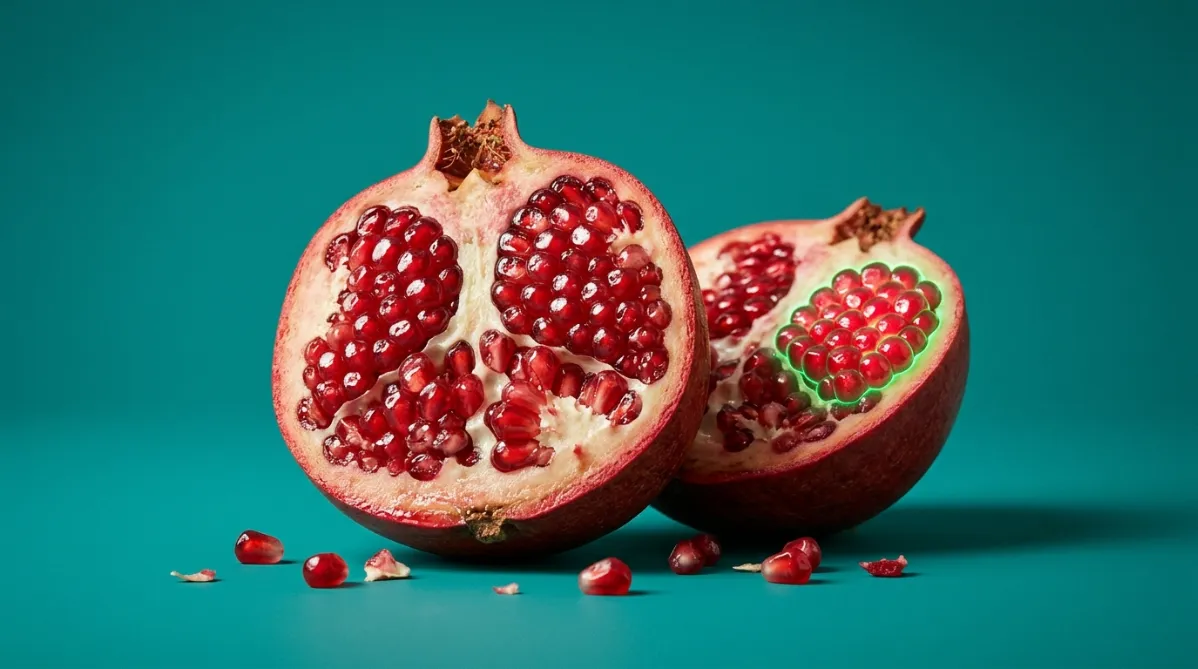
A single pomegranate, split open, sits at the center of a saturated teal backdrop. It is photographed from a slightly high three-quarter angle with a macro lens. One half is pulled slightly forward and the other stays behind it, which hints at two close siblings. The ruby arils are glossy and densely packed. In the smaller half, a few arils glow with a subtle electric green rim light, as if one has been singled out. Pomegranate is a natural source of the precursors that gut bacteria convert into urolithins. Soft, large-source studio light comes from the upper left. It casts crisp, clean shadows on a seamless teal surface and gives the red fruit sharp specular highlights. A few arils are scattered nearby. The mood is curious, vivid and quietly scientific, with a strong red-against-teal contrast and no text.
longevity

Urolithin D ve A: Fare Hafızasını Koruyan Gizemli Kardeş

BY NOVA CHEN ·

Urolithin A sıkça gündeme gelirken, pek bilinmeyen kardeşi urolithin D, yaşlanan farelerde beyin koruyucu etkiler gösterdi. D‑galaktozla indüklenen yaşlanma modelinde, oral urolithin D hafıza ile ilgili sonuçları iyileştirdi ve hipokampal hasarı azalttı; bu etkiler AMPK, PGC‑1α ve SIRT3 sinyal yolları ile mitofaji belirteçleri aracılığıyla ortaya çıktı. Hücre deneylerinde AMPK ya da PGC‑1α’nın bloke edilmesi faydayı ortadan kaldırdı. Ancak çalışma kimyasal olarak yaşlanma tetiklenen fare modeli ve hücre deneyine dayalı; insan verisi yok ve urolithin D’nin urolithin A ile doğrudan karşılaştırması yapılmadı. İşte bu bulguların ne anlama geldiği, urolithinlerin nereden geldiği ve şimdilik ne yapılması (ve ne yapılmaması) gerektiği.

This page is available in